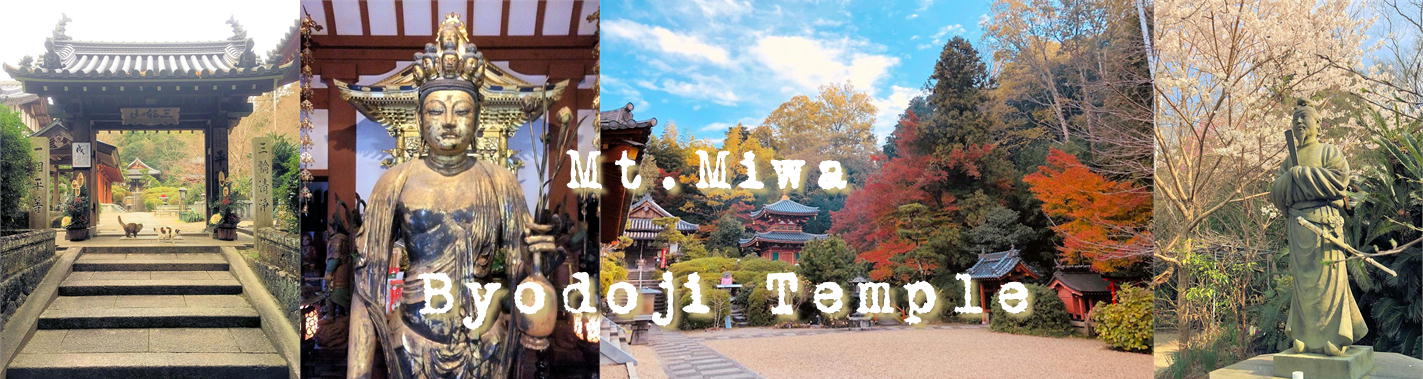
開基開山 聖徳太子ゆかり 山の辺の道の禅の寺 善光寺48願所第17番 大和北部第81番霊場
三輪山平等寺は、その開基を聖徳太子と伝え、永遠の平和を祈願する霊場として創建されました。鎌倉時代の初期、中興の祖、慶円上人(三輪上人1140~1223)を迎えるに及び、東西500m、南北330mの境内に、本堂、護摩堂、御影堂、一切経堂、開山堂、赤門、鐘楼堂のほか、12坊舎の大伽藍を有し三輪社奥の院として、由緒ある名刹でありました。 平等寺は三輪別所とも呼ばれ、高徳の上人を中心に、仏法の奥義をきわめんとする行学一如の根本道場として栄えました。東大寺の宗性は嘉禎元年(1235年)8月20日に平等寺において法華、唯識、般若三観抄を写し、幾度も当山を訪れたことや、建長2年(1250年)正月、西大寺の叡尊も三輪別所一乗上人の禅室に参詣した史実も明らかで、鎌倉時代の平等寺には、仏法、学問の奥義を求めて多くの人々が参詣しました。 室町、江戸時代には醍醐寺三宝院、南部興福寺とも深く関係し、80石の朱印地を持ち修験道の霊地でもありました。また、慶長5年(1600年)9月15日関ヶ原の合戦で敗れた薩摩の領主、島津義弘主従がこの寺に逃げ込み11月28日まで70日間滞在し無事帰国されました。しかし残念なことに、明治維新になって、政府の廃仏毀釈(仏を廃し神を敬する)の令きびしく、大神神社の神宮寺であった平等寺は、ことさらにそのあらしを強く受け、有名な金屋の石仏をはじめ61体にのぼる仏像が他所に運び出され、堂塔ことごとく整理を迫られましたが、幸いにその直後小西氏より現境内地の寄進を受け再興の道が開かれ、覚信和尚や町内有志の方々の努力により塔頭の一部を境内に移し、本尊秘仏十一面観世音菩薩、三輪不動尊、慶円上人像、仏足石等が守られ、梁天和尚が翠松庵の寺号を移し禅曹洞宗に改宗し法燈を護持しました。聖徳太子はじめ歴住諸大和尚の慈恩に報いるべく平等寺の再興のために微力ながら勧進托鉢行を続けてきましたが、廃仏毀釈より100年目を迎えた昭和52年6月4日付で平等寺と寺号が復興され、幾十万の人々よりご喜捨を賜わり、ありがたくも本堂、鐘楼堂、鎮守堂、翠松閣、釈迦堂(二重塔)の復興をはじめ前立本尊十一面観世音菩薩のご造立をみることができましたのは、すべて神仏のご加護と皆々様の真心からなる奉賛のたまものと深く感謝いたしております。 ご参詣の皆様、ご奉賛の皆様方にお釈迦さまの慈悲の光明が無限に照り輝きますように、心からお祈り申し上げます。
三輪山平等寺74世 丸子孝法 合掌
The History and Origin of Byodo-ji Temple
Founded by Prince Shotoku
• Connected to Prince Shotoku
• A Zen Temple along the Yamanobe-no-Michi Trail
• No. 17 of the Zenko-ji 48 Pilgrimage Sites
• No. 81 of the Northern Yamato Pilgrimage SitesMiwa-san
Byodo-ji Temple is said to have been founded by Prince Shotoku as a sacred
site to pray for eternal peace. During the early Kamakura period, the temple
welcomed its restorer, the venerable monk Keien (also known as Miwa Shonin,
1140–1223). Under his guidance, the temple expanded into a grand complex
serving as the inner sanctuary (Oku-no-in) of the Miwa Shrine. The precincts
spanned 500 meters from east to west and 330 meters from north to south,
featuring a Main Hall, Goma Hall, Miei Hall, Issaikyo Hall, Founder's Hall,
a Red Gate, a Bell Tower, and 12 monk residences.Also known as Miwa Bessho,
Byodo-ji flourished as a core training center where high-minded monks pursued
the unity of Buddhist practice and academic study. Historical records clearly
show that many people visited the temple in the Kamakura period seeking
the depths of Buddhist law and scholarship. For instance, on August 20,
1235, the monk Soshō from Todai-ji Temple visited Byodo-ji multiple times
to copy sacred texts. Additionally, in January 1250, Eison from Saidai-ji
Temple visited the meditation room of Ichijo Shonin at Miwa Bessho.During
the Muromachi and Edo periods, the temple maintained close ties with Sanbo-in
of Daigo-ji Temple and Kofuku-ji Temple in the southern region. It possessed
a shogunal domain (shuinchi) yielding 80 koku of rice and served as a sacred
site for Shugendo (mountain asceticism). Furthermore, following their defeat
at the Battle of Sekigahara on September 15, 1600, Yoshihiro Shimazu, the
lord of Satsuma, and his retainers fled to this temple. They stayed for
70 days until November 28, eventually returning home safely.Unfortunately,
during the Meiji Restoration, the government enforced strict policies to
separate Buddhism and Shinto (Haibutsu Kishaku), aiming to abolish Buddhism.
As a temple historically integrated with Omiwa Shrine, Byodo-ji bore the
full brunt of this movement. Sixty-one Buddhist statues, including the
famous Kanaya Stone Buddha, were removed to other locations, and the temple
buildings were forced into demolition.Fortunately, shortly after this crisis,
the Konishi family donated the current temple grounds, opening a path toward
reconstruction. Through the dedicated efforts of the priest Kakushin and
local volunteers, parts of the sub-temples were relocated to the current
site. This preserved the hidden principal image of the Eleven-Headed Kannon
Bodhisattva, the Miwa Fudo Myoo, the statue of Keien Shonin, and the Buddha’s
Footprint Stone. Later, Priest Ryōten transferred the temple name "Suisho-an,"
converted the temple to the Soto Zen sect, and kept the Buddhist flame
alive.To repay the benevolence of Prince Shotoku and successive chief priests,
the temple continued fundraising and mendicant practices (takuhatsu) to
rebuild Byodo-ji. On June 4, 1977—marking the 100th year since the anti-Buddhist
movement—the official name "Byodo-ji" was finally restored. Thanks
to the generous donations of hundreds of thousands of people, the temple
successfully reconstructed the Main Hall, Bell Tower, Chinju Hall, Suisho-kaku,
and Shaka Hall (Two-Story Pagoda). A new front-facing statue of the Eleven-Headed
Kannon Bodhisattva was also enshrined. We deeply appreciate these achievements,
which are the fruits of divine protection and everyone's sincere support.We
sincerely pray that the light of the Buddha's compassion will eternally
shine upon all visitors and supporters.With palms pressed together,
Koho Maruko 74th Chief Priest of Miwa-san Byodo-ji Temple
